Thinking about which English test to take for your studies or work abroad? It can be confusing with options like IELTS and TOEFL. This guide is here to help you figure it all out, especially if you're wondering how scores from one test might look on the other. We'll look at an IELTS to TOEFL converter and what it all means for your plans in 2025.
Key Takeaways
- Using an IELTS to TOEFL converter can give you a general idea of score equivalency, which is helpful when deciding which test to prepare for.
- While converters are useful tools, they provide approximations, not exact matches. Always check the specific score requirements of the institutions you're applying to.
- IELTS and TOEFL differ in format, accent exposure, and speaking assessment style, so one might naturally suit you better than the other.
- Understanding the differences between the tests can help you make a more informed choice about which one to take, potentially saving you preparation time and stress.
- Score conversion tools are best used as a preliminary guide to help you choose a test, not as a substitute for meeting official admission requirements.
Understanding IELTS to TOEFL Score Conversion
Why Convert Your Scores?
So, you've taken the IELTS and are looking at universities that only accept TOEFL, or maybe you're just curious about how your scores stack up. It's pretty common to wonder about this. Converting your scores gives you a clearer picture of your English proficiency across different testing systems. It's not about cheating the system or anything like that; it's more about understanding where you stand when different tests are required. Think of it like translating between two languages – you want to make sure the meaning stays the same.
The Role of Score Conversion in Test Selection
Sometimes, deciding which test to take can be a headache. You might have a preference for one format over the other, or maybe your target institutions have different requirements. Score conversion tools can be super helpful here. They let you see, roughly, what score you might get on the other test. This can help you make a more informed decision about which exam to prepare for, especially if you're on the fence.
Here's a general idea of how IELTS bands might translate to TOEFL scores. Keep in mind these are just estimates, and official university requirements are what really matter.
| IELTS Band | Approximate TOEFL Score |
|---|---|
| 9.0 | 118–120 |
| 8.5 | 115–117 |
| 8.0 | 110–114 |
| 7.5 | 102–109 |
| 7.0 | 94–101 |
| 6.5 | 79–93 |
| 6.0 | 60–78 |
| 5.5 | 46–59 |
| 5.0 | 35–45 |
Bridging the Gap Between IELTS and TOEFL
Even though IELTS and TOEFL test the same thing – your English skills – they do it in different ways. IELTS uses a mix of accents and has a face-to-face speaking interview, while TOEFL is fully computer-based with a single, American accent. Because of these differences, a direct score conversion isn't always perfect. It's more like finding a close equivalent than an exact match.
It's important to remember that score conversion is primarily a tool for estimation and comparison. Official score requirements from universities or institutions should always be your primary reference point. Relying solely on conversion charts without checking specific institutional guidelines can lead to misunderstandings.
Here are a few things to consider when thinking about the differences:
- Test Format: IELTS has both paper-based and computer-delivered options, while TOEFL is exclusively computer-based.
- Speaking Section: IELTS features a live, one-on-one interview with an examiner, whereas TOEFL involves speaking into a microphone to record your responses.
- Accent Exposure: IELTS exposes you to a variety of English accents (British, Australian, American, etc.), while TOEFL primarily uses American English accents.
Navigating the IELTS to TOEFL Converter
So, you've taken the IELTS and now you need to figure out what that score means for a TOEFL-required program, or maybe you're just curious. That's where our handy converter comes in. It's designed to make this whole score-swapping thing a lot less confusing.
How Our Language Test Calculators Work
Our goal with these calculators is pretty simple: to give you a clear picture of your English test scores. We know that different tests have different ways of scoring, and it can be a headache trying to compare them. That's why we built these tools. They take your scores from one test and show you what they'd likely be on another, using official guidelines.
Here's the basic idea:
- Input Your Scores: You'll enter your scores from the test you took. This might be your overall IELTS band score or individual section scores. If you're converting the other way, you'll input your TOEFL section scores.
- Official Conversion Logic: We use the most up-to-date conversion charts and methods that are recognized by the testing organizations themselves, like ETS for TOEFL and the British Council/IDP for IELTS. This helps make sure the conversion is as accurate as possible.
- Instant Results: Once you put in your numbers, the calculator does its thing and shows you the equivalent scores right away. It's pretty straightforward.
The conversion process isn't about saying one test is 'better' than the other. It's simply a way to translate scores so that institutions and individuals can understand equivalencies when comparing different testing systems.
Inputting Your Scores Accurately
Getting the right conversion starts with putting in the correct numbers. It sounds obvious, but it's easy to make a small mistake that throws things off.
- For IELTS: You'll typically need your overall band score (out of 9.0) and sometimes your individual band scores for Listening, Reading, Writing, and Speaking. Make sure you're using the scores from your official Test Report Form.
- For TOEFL: You'll need your scores for the four sections: Reading, Listening, Speaking, and Writing. Each section is scored out of 30, for a total possible score of 120.
Double-checking your input is always a good idea before hitting 'convert'.
Interpreting Instant Conversion Results
Once the calculator gives you the converted score, what does it mean? Usually, it will show you the equivalent score on the other test's scale. For example, an IELTS band of 7.0 might convert to a TOEFL score in the low 90s. It's important to remember that these are estimates.
Here's a general idea of how scores can line up, though official university requirements are the final word:
| IELTS Band | Approximate TOEFL Score | IELTS Band | Approximate TOEFL Score |
|---|---|---|---|
| 9.0 | 118–120 | 6.0 | 60–78 |
| 8.5 | 115–117 | 5.5 | 46–59 |
| 8.0 | 110–114 | 5.0 | 35–45 |
| 7.5 | 102–109 | ||
| 7.0 | 94–101 | ||
| 6.5 | 79–93 |
These numbers give you a ballpark figure. If a university asks for a TOEFL score of 100, you can see that an IELTS band of 7.5 or 8.0 might be what you need. Always check the specific requirements of the institution you're applying to, as they might have their own conversion charts or minimum scores for each section.
Key Differences Between IELTS and TOEFL
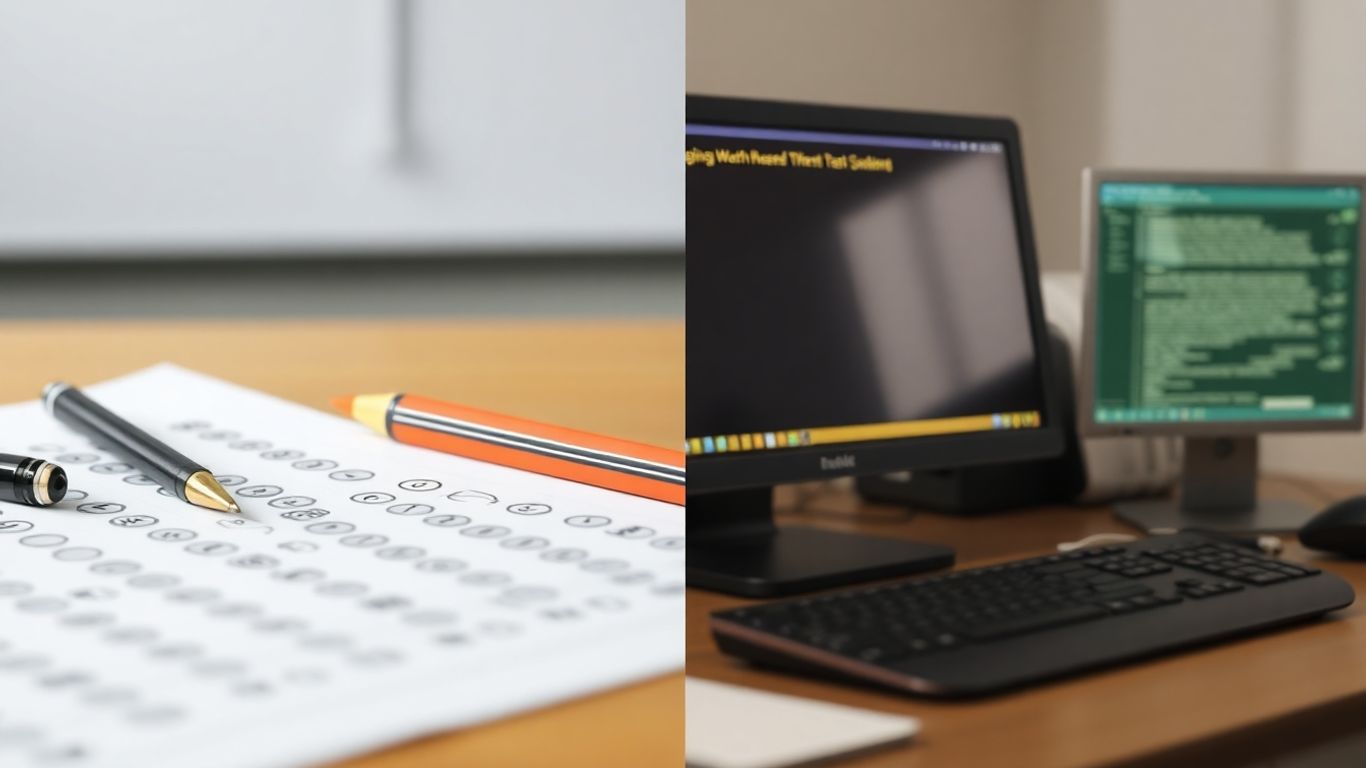
So, you're trying to figure out if IELTS or TOEFL is the right fit for you, and maybe you've already taken one and need to convert your score. It's totally normal to wonder about the differences because, honestly, they're not exactly the same, even though they both test your English skills. Think of it like choosing between two different routes to get to the same city – both get you there, but the journey feels different.
Test Format and Delivery Modes
One of the biggest distinctions is how the tests are structured and delivered. IELTS offers a bit more flexibility here. You can choose between a paper-based test or a computer-delivered one. Plus, the speaking section can sometimes be scheduled on a different day, either a week before or after your main test. TOEFL, on the other hand, is pretty much exclusively the internet-based test (iBT), and it's all done on a computer. It also has a short break built into the middle of the test, which IELTS doesn't really offer in the same way.
Here's a quick look at how the sections stack up:
| Section | IELTS | TOEFL iBT |
|---|---|---|
| Reading | 3 long passages, 40 questions, 60 minutes | 2-3 passages, 20 questions, 35 minutes |
| Writing | Task 1: Describe visual (20 min), Task 2: Essay (40 min) | Academic discussion response, ~20 minutes |
| Listening | 4 recordings, 40 questions, 40 minutes | 1-2 lecturer conversations, 28 questions, 35 minutes |
| Speaking | Face-to-face with examiner, 3 parts, 11-14 minutes | Recorded responses, 1 independent task, 3 integrated tasks, 17 minutes |
Accent Exposure and Speaking Assessment
When it comes to accents, IELTS throws a bit of a global mix at you. You'll hear British, Australian, American, Canadian, and other international accents. This is great for preparing you for real-world conversations. TOEFL, however, tends to stick more to North American accents, which might feel more familiar if you're aiming for universities in the US or Canada. The speaking part is also quite different. IELTS has a live, face-to-face interview with an examiner, which many find more natural for showing off conversational skills. TOEFL has you record your answers into a computer, often after reading a passage or listening to a lecture, which tests your ability to synthesize information quickly.
The way each test assesses speaking can really change how you prepare. If you're more comfortable talking directly to someone, IELTS might feel better. If you're good at organizing your thoughts and speaking clearly into a microphone based on prompts, TOEFL could be your strength.
Scoring Systems Explained
This is where the conversion tool really comes into play. IELTS uses a band score system from 0 to 9, with half bands also possible. Each section gets a band score, and then you get an overall band score. TOEFL uses a scale from 0 to 120, with scores for each section ranging from 0 to 30. Because these scales are so different, converting your score accurately is key for university applications. It's not a simple 1:1 translation, which is why using a reliable converter is so helpful when you're comparing requirements or planning your next steps.
Leveraging the IELTS to TOEFL Converter for Admissions
So, you've taken the IELTS and now you're looking at universities that primarily list TOEFL scores. Don't panic! This is where our handy converter really shines. It's not just about getting a number; it's about understanding how your current English skills stack up against what different institutions are looking for.
University Score Requirements
Universities, especially those in North America, often have specific score requirements for both IELTS and TOEFL. They do this to set a baseline for English proficiency. Sometimes, they'll list a minimum score for one test, and an equivalent minimum for the other. For example, a university might say they need a 6.5 on IELTS or an 80 on TOEFL iBT. Our converter helps you see if your IELTS score meets that TOEFL threshold, or vice versa.
It's super important to check the exact requirements for each university you're interested in. Don't just guess. Look at their admissions pages or contact their international student office. They'll usually have a clear chart or statement about accepted scores.
Estimating Your TOEFL Equivalency
This is the core function of the converter. You plug in your IELTS band scores for each section (Listening, Reading, Writing, Speaking), and it gives you an estimated TOEFL score range. It's not a perfect science, because the tests are different, but it gives you a really good ballpark figure. For instance, if you got a 7.0 overall on IELTS, the converter might show you that this is roughly equivalent to a TOEFL score between 94 and 101.
Here’s a quick look at how some IELTS bands generally translate to TOEFL scores:
| IELTS Band | Estimated TOEFL Score Range |
|---|---|
| 9.0 | 118-120 |
| 8.5 | 115-117 |
| 8.0 | 110-114 |
| 7.5 | 102-109 |
| 7.0 | 94-101 |
| 6.5 | 79-93 |
| 6.0 | 60-78 |
Remember, these are just estimates. The actual conversion can vary slightly depending on the specific university's internal conversion scale.
Strategic Test Preparation
Knowing your estimated TOEFL equivalency can really help you plan your next steps. If your IELTS score is a bit lower than the TOEFL requirement for your dream school, you now know exactly what you need to aim for. This allows you to:
- Focus your study: Instead of studying for the entire TOEFL, you can target specific skills or sections where you might be weaker based on the differences between the tests.
- Set realistic goals: You can set a clear target score for your TOEFL preparation, making the process feel more manageable.
- Decide which test to take: If you're still deciding between IELTS and TOEFL, seeing how your current skills might convert can help you pick the test you're more likely to score well on.
The converter acts as a bridge, helping you understand your current standing in the context of different testing systems. It's a tool to inform your decisions, not replace the need for understanding the nuances of each exam.
Ultimately, using the IELTS to TOEFL converter is about making informed choices. It helps you translate your achievements on one test into a language that admissions committees for another test will understand, saving you time and reducing uncertainty in your application journey.
Pros and Cons of Score Conversion Tools
So, you've taken an English proficiency test and you're wondering how your score stacks up against another one, like converting IELTS to TOEFL. It's a common thought, and thankfully, there are tools out there to help you get a ballpark figure. These calculators can be super handy for a few reasons, but it's also important to know their limits.
Benefits of Score Approximation
Using a converter can give you a quick idea of where you stand. If you're not sure which test to take next, or if you're unhappy with a previous score, these tools can help you figure out if retaking the same test or switching to another might be a better move. It's like getting a preliminary report card before you commit to more study. This can really help in planning your next steps and setting realistic goals. Plus, seeing a potential equivalent score can give you a nice confidence boost, which is always a good thing when you're facing more exams.
- Quick Score Estimation: Get an immediate idea of your score's equivalent on another test.
- Informed Test Selection: Helps decide whether to retake a test or prepare for a different one.
- Goal Setting Aid: Provides a target score range for future preparation.
- Confidence Builder: Seeing a potential equivalent can be motivating.
Limitations of Conversion Charts
Here's the thing, though: these conversions aren't official. They're based on general comparisons, and universities or immigration bodies usually want to see scores from the specific test they require. For example, if a university needs a TOEFL score of 90, and your IELTS score converts to a range of, say, 79-93, it's still a bit of a gamble. You might be just above or just below their actual cutoff. These tools are best used for planning, not as a final say. They give you an approximation, a likely range, but not a guaranteed equivalency.
It's really important to remember that score converters are just guides. They're built on general comparisons between tests, and they can't account for the specific nuances of each exam or the exact requirements of every institution. Think of them as a helpful starting point for your research, not the end of it.
When Conversion is Not a Substitute
Ultimately, you can't submit an IELTS score to a place that asks for TOEFL, even if you've converted it. You'll likely have to take the required test. So, while these calculators are great for getting a feel for things and planning your study strategy, they don't replace the need to take the official test that your target institution or program requires. Always check the official score requirements directly with the university or organization you're applying to. They're the ones who make the final decision, not a handy online calculator.
Making Informed Test Choices
So, you've looked at the scores, maybe even used a converter, but now what? Picking between IELTS and TOEFL isn't just about which one seems easier on paper. It's really about figuring out which test fits you and where you want to go. Think of it like choosing the right tool for a job – you wouldn't use a hammer to screw in a bolt, right? The same applies here.
Student Preferences and Test Suitability
Your personal comfort level plays a big part. Are you someone who likes talking to people, or do you prefer interacting with a computer? This can make a difference.
- IELTS: Many students find the speaking section more natural because it's a face-to-face interview with an examiner. If you're more comfortable with varied accents in the listening section and prefer a mix of question types in reading, IELTS might feel more approachable.
- TOEFL: This test is all computer-based. If you're a fast typist and comfortable speaking into a microphone, and you're used to North American accents, TOEFL could be a good fit. The reading section often uses multiple-choice questions, which some people find straightforward.
Ultimately, the "best" test is the one that aligns most effectively with your target destination, your specific visa requirements, your target institutions, and your personal test-taking preferences. Don't just pick based on what your friends are doing.
Factors Influencing Test Choice
Beyond just personal preference, other things matter. Where are you planning to study or work? That's a huge factor.
- Destination: If you're aiming for universities in the United States, TOEFL is often the standard. For countries like Canada, the UK, Australia, or New Zealand, IELTS is generally more widely accepted, especially for immigration purposes.
- Test Format Comfort: Some people just don't like the idea of speaking into a microphone for an extended period. Others find handwriting essays stressful and prefer typing.
- Accent Exposure: IELTS exposes you to a wider range of English accents, which can be good practice if you plan to live in a multicultural environment. TOEFL primarily uses North American accents.
Personalized Test Recommendations
To really nail down which test is right for you, consider these points:
- Check University/Immigration Websites: Always look at the specific requirements for the institutions or countries you're interested in. Some might accept both, while others might strongly prefer one over the other.
- Try Practice Tests: Take a practice test for both IELTS and TOEFL. See which format feels more natural and where you naturally score better. This hands-on experience is incredibly telling.
- Consider Your Strengths: Are you better at structured, academic tasks or more conversational ones? Do you excel at synthesizing information from different sources (TOEFL integrated tasks) or describing visual data (IELTS Writing Task 1)?
| Feature | IELTS | TOEFL iBT |
|---|---|---|
| Speaking Format | Face-to-face with examiner | Speak into a microphone |
| Listening Accents | Varied global accents | Primarily North American |
| Writing Format | Handwritten or typed (depending on mode) | Typed |
| Primary Acceptance | UK, Canada, Australia, NZ, Immigration | USA, Academic Institutions |
Wrapping It Up
So, we've gone over how to get a handle on your IELTS scores and what they might look like if you were taking the TOEFL, or vice versa. It's not about tricking anyone or avoiding a test you need to take. Think of it more like getting a general idea of where you stand. If you're aiming for a specific school or program, always check their exact requirements. These conversion tools are super helpful for planning and figuring out which test might be a better fit for you, especially as we move through 2025. Good luck with your test prep!
Frequently Asked Questions
Why would I need to convert my IELTS score to a TOEFL score?
Sometimes, a university or program you're interested in might prefer TOEFL scores, even if you took the IELTS. Converting your score helps you see how you might perform on the TOEFL or if your current IELTS score meets the TOEFL requirement. It's a way to check if you need to take the other test.
How does the IELTS to TOEFL converter actually work?
These converters use official charts and formulas that compare scores from both tests. They look at how different score levels on the IELTS line up with score levels on the TOEFL. You just put in your IELTS scores, and the tool shows you the estimated TOEFL equivalent.
Are the converted scores exact, or just a guess?
Think of them as a really good guess or an estimate. The conversion charts give you a range, not a single, perfect number. Universities usually have their own specific requirements, so while the converter is helpful, it's always best to check the exact scores they want.
Can I use my IELTS score to apply to a university that only accepts TOEFL?
Generally, no. You usually can't directly use your IELTS score if a school strictly requires TOEFL. You'd likely need to take the TOEFL test. The converter helps you figure out your potential TOEFL score so you know what to aim for if you decide to take the TOEFL.
What are the main differences between IELTS and TOEFL?
The biggest differences are the accents you hear (IELTS uses various English accents, TOEFL mainly uses American), the speaking section (IELTS has a live interviewer, TOEFL is recorded), and the format (IELTS can be on paper or computer, TOEFL is always online). Their scoring systems are also different.
Should I rely completely on a score converter to choose my test?
Not entirely. While converters are handy for a quick idea, they don't tell the whole story. Consider which test format feels more comfortable for you, which accents you understand better, and what your personal strengths are. Sometimes, one test just feels like a better fit for you, regardless of score conversion.